
The US Constitution and laws do not protect oil companies from being sued over the harm they cause to the climate
Standards & regulation: The US Constitution and laws do not protect oil companies from being sued over the harm they cause to the climate. Read it as a rules signal that may redefine what must be measured, reported, or proven.
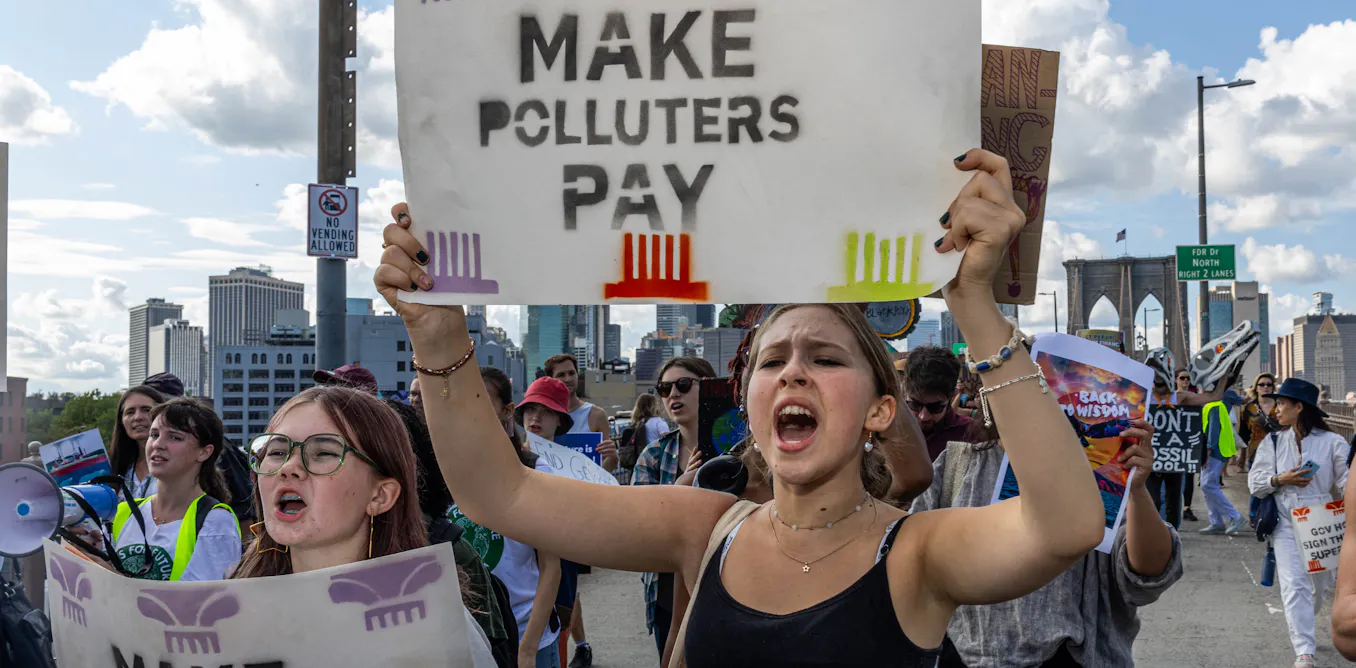
Standards & regulation: The US Constitution and laws do not protect oil companies from being sued over the harm they cause to the climate. Read it as a rules signal that may redefine what must be measured, reported, or proven.
Still developing
The source reports a concrete green-economy development. Keep distance between the fact reported and the wider consequences inferred from it.
Scan the signal before reading the analysis.
- Signal level
- Useful Update
- Signal strength
- Useful
- Time horizon
- 0-24 months
- Human impact
- Medium
- Economic impact
- High
- Governance impact
- High
- Confidence
- Medium
What the source is actually reporting.
Across the U.S., people are calling for companies to pay for the damage they have done to the environment. Alex Kent/AFP via Getty Images In recent years, at least two dozen local...
The Conversation (Environment) is the source captured by the GCE crawler.
A rule, standard, or policy direction may change the operating boundary for green work.
Published May 21, 2026. GCE classifies it as useful update in Standards & regulation.
Chip reads this as a green-transition signal, not just a headline: Across the U.S., people are calling for companies to pay for the damage they have done to the environment. Alex Kent/AFP via Getty Images In recent years, at least two dozen local and...
In Standards & regulation, rules change behavior when they define what must be measured, reported, imported, financed, or proven.
The decision test is practical: does this change evidence, cost, delivery, risk, buyer access, or the next operating step?
The consequence is more important than the headline.
Standards and regulation change what must be proven before a project, product, or claim can scale.
Project Impact
Project teams need to translate the rule into affected products, suppliers, documents, and deadlines.
Business Impact
Regulation can raise compliance cost, but it can also reward companies that prepared evidence early.
Governance Impact
Standards turn abstract climate ambition into a practical boundary for markets and operations.
Market System Impact
When rules harden, they reset the baseline for what credible green economy participation means.
Follow the incentives, not the announcement.
- Compliant operators: They gain when clear standards reward earlier preparation.
- Regulators and buyers: They gain leverage when evidence requirements become explicit.
- Unprepared suppliers: They face cost and access pressure when requirements become enforceable.
- Ambiguous claims: They become harder to defend once standards define the proof boundary.
Trust improves when the angles are visible.
The priority is turning ambition into enforceable evidence.
The risk is missing deadlines or underestimating documentation work.
The practical question is what must be measured and by when.
Primary action: Prepare
- Map the rule to products, suppliers, and reporting deadlines.
- Identify evidence gaps before enforcement arrives.
- Translate policy language into one operating checklist.
This signal belongs to a wider GCE category pattern.



Source and evidence still matter.
This page is a Chip interpretation of the original article. It is not the original article. Please read the original source for the full report.
Source: The Conversation (Environment) · Published May 21, 2026.
What readers are saying.
No comments yet
The US Constitution and laws do not protect oil companies from being sued over the harm they cause to the climate
This brief does not have any reader comments yet.