
The cloud has sound: The unrelenting and unseen cost of AI data centers
Projects & development: The cloud has sound: The unrelenting and unseen cost of AI data centers. Read it as a delivery signal where permits, finance, local value, and monitoring must align.

Projects & development: The cloud has sound: The unrelenting and unseen cost of AI data centers. Read it as a delivery signal where permits, finance, local value, and monitoring must align.
Evidence phase
This is useful as evidence, not as a final verdict. Watch whether follow-on sources, buyers, regulators, or projects act on it.
Scan the signal before reading the analysis.
- Signal level
- Useful Update
- Signal strength
- Useful
- Time horizon
- 1-5 years
- Human impact
- High
- Economic impact
- High
- Governance impact
- Medium
- Confidence
- Medium
What the source is actually reporting.
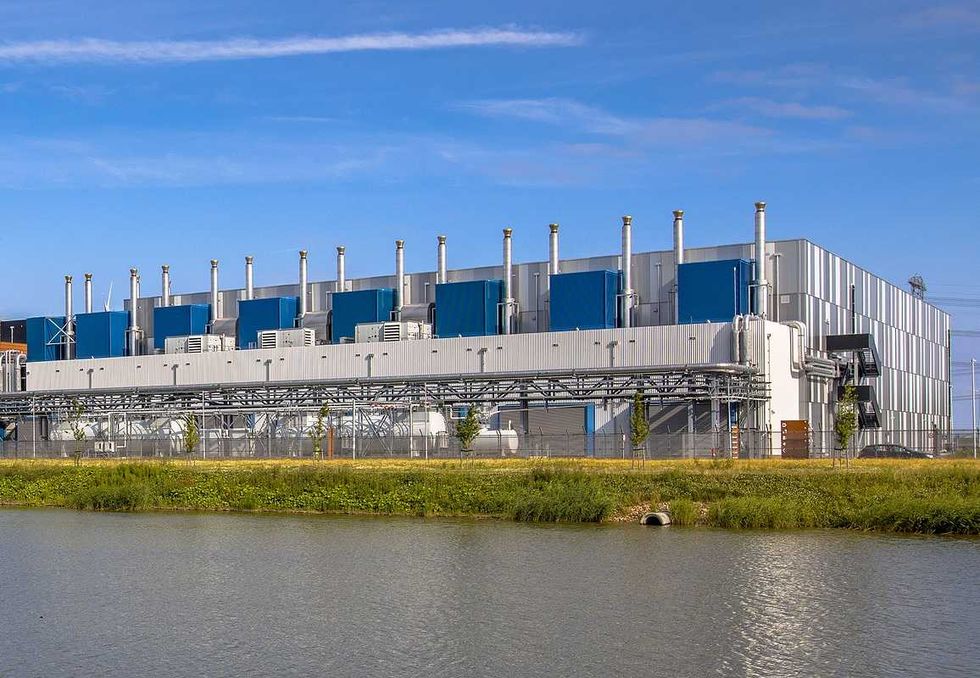
As tech giants rush to build infrastructure, some residents who live near data centers say a constant low-frequency vibration is ruining their health and homes.
Environmental Health News, with topic tags around Climate-change, Energy, Environmental-health.
A project or development pathway is moving through the delivery pipeline.
Published Jun 18, 2026. GCE classifies it as useful update in Projects & development.
The article, rewritten as a brief.
GCE rewrites the reported signal in its own words from the crawled source excerpt, title, source, date, and operating lane. It is a reader-friendly digest, not a copy of the publisher article, and it is not permission to repost the publisher's full text, image, or reporting elsewhere.
Environmental Health News is reporting a useful update connected to projects & development. The core reported point is this: As tech giants rush to build infrastructure, some residents who live near data centers say a constant low-frequency vibration is ruining their health and homes.
For a green-transition reader, the important detail is not only the headline. The story sits inside projects & development, where development only becomes transition value when permits, finance, delivery, monitoring, and local fit align. This means the reported move should be read through market access, evidence, delivery capacity, buyer behavior, and the operating boundary it may change.
The timing also matters. The item was published on June 18, 2026, and GCE classifies it as useful update with medium confidence. That means the direction is visible enough to watch, but the practical outcome still depends on follow-through, implementation details, and whether other sources confirm the same movement.
The useful takeaway is practical: keep the source fact separate from the interpretation, then ask what must be checked next. For this brief, the next checks are who gains access, who faces pressure, what proof is required, which suppliers or buyers are affected, and whether the reported change becomes a repeatable pattern rather than a single news item.
Chip reads this as a green-transition signal, not just a headline: As tech giants rush to build infrastructure, some residents who live near data centers say a constant low-frequency vibration is ruining their health and homes.
In Projects & development, development only becomes transition value when permits, finance, delivery, monitoring, and local fit align.
The decision test is practical: does this change evidence, cost, delivery, risk, buyer access, or the next operating step?
The consequence is more important than the headline.
Projects become real when land, permits, finance, delivery, and local value align.
Project Impact
The key question is whether this project can move from announcement to durable operation.
Business Impact
Delivery creates local jobs and market activity, but delays, permits, and weak monitoring can erode value.
Governance Impact
Projects need transparent approvals, land clarity, safeguards, and reporting before trust scales.
Market System Impact
Physical projects are where transition claims meet land, money, communities, and maintenance reality.
Follow the incentives, not the announcement.
- Local delivery teams: They gain when projects move into real procurement and operation.
- Communities with durable benefit-sharing: They benefit if local value is designed before launch.
- Projects without permits or finance: They are exposed when announcement energy meets delivery reality.
- Communities left out of design: They carry risk if development ignores local context.
Trust improves when the angles are visible.
The signal matters if it changes permits, finance, construction, or operations.
The concern is whether benefits, risks, and stewardship are shared clearly.
The question is whether the project can prove delivery and manage long-term risk.
Primary action: Prepare
- Check project stage: announced, permitted, financed, building, or operating.
- Identify the missing delivery dependency.
- Ask who maintains the asset after launch.
This signal belongs to a wider GCE category pattern.


Source and evidence still matter.
This page is a Chip interpretation of the original article. It is not the original article. Please read the original source for the full report.
Source: Environmental Health News · Published Jun 18, 2026.
What readers are saying.
No comments yet
The cloud has sound: The unrelenting and unseen cost of AI data centers
This brief does not have any reader comments yet.