
Sustainable battery recycling through spatial and technological alignment
CAPACITY BUILDING & STRATEGY: Sustainable battery recycling through spatial and technological alignment. Read it as a capacity and execution signal, not a strategy slogan.
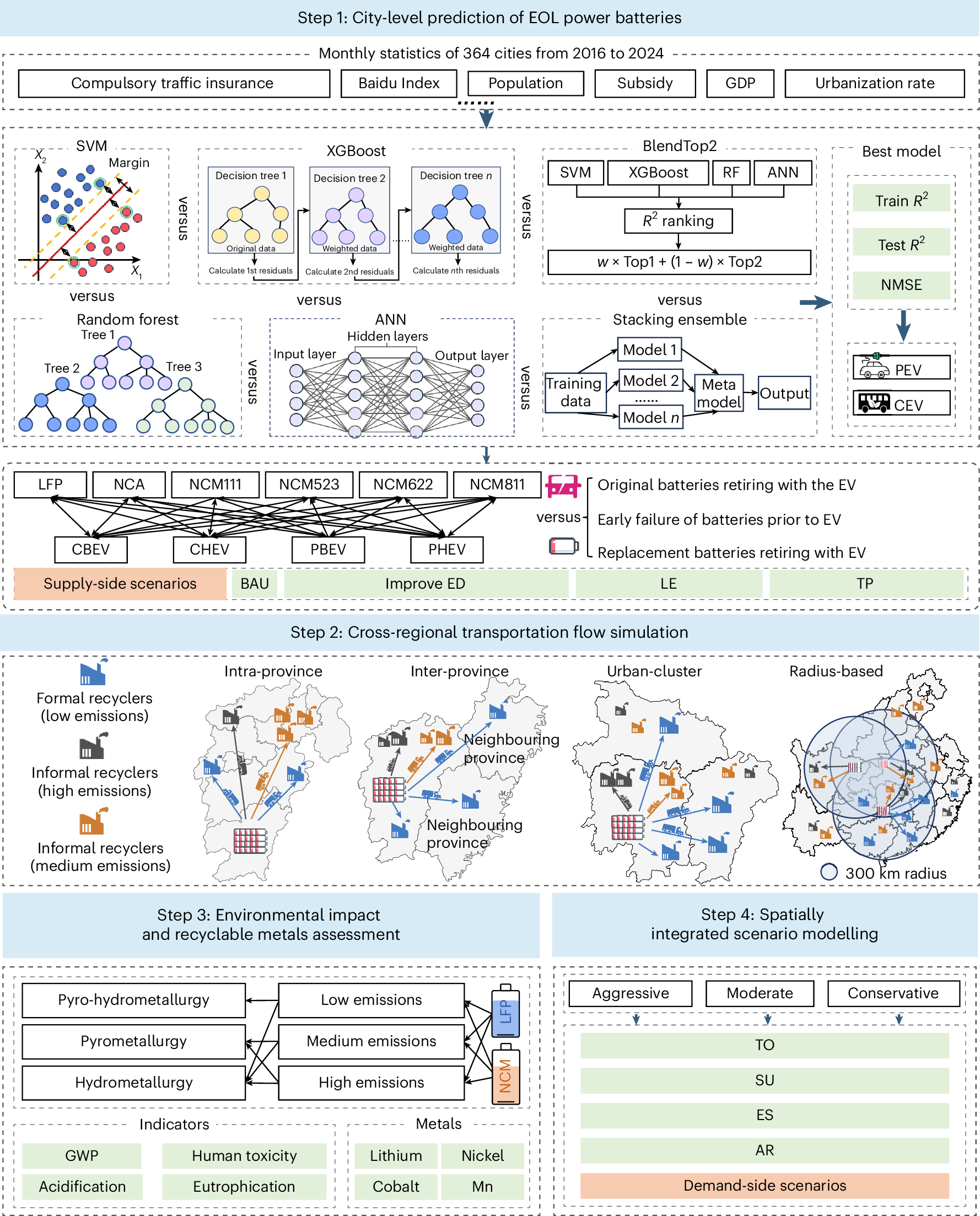
CAPACITY BUILDING & STRATEGY: Sustainable battery recycling through spatial and technological alignment. Read it as a capacity and execution signal, not a strategy slogan.
Execution phase
The reported move appears to be active or rolling out. The open question is adoption, durability, and measurable transition value.
Scan the signal before reading the analysis.
- Signal level
- Useful Update
- Signal strength
- Useful
- Time horizon
- 6-24 months
- Human impact
- High
- Economic impact
- Medium
- Governance impact
- Medium
- Confidence
- Low
What the source is actually reporting.
Nature Sustainability, Published online: 08 June 2026; doi:10.1038/s41893-026-01851-6 Battery recycling has a crucial role in enabling circular economy and sustainable energy...
Nature Sustainability is the source captured by the GCE crawler.
The transition signal is moving from ambition into capability-building work.
Published latest crawl. GCE classifies it as useful update in CAPACITY BUILDING & STRATEGY.
The article, rewritten as a brief.
GCE rewrites the reported signal in its own words from the crawled source excerpt, title, source, date, and operating lane. It is a reader-friendly digest, not a copy of the publisher article, and it is not permission to repost the publisher's full text, image, or reporting elsewhere.
Nature Sustainability is reporting a useful update connected to capacity building & strategy. The core reported point is this: Nature Sustainability, Published online: 08 June 2026; doi:10.1038/s41893-026-01851-6 Battery recycling has a crucial role in enabling circular economy and sustainable energy transition....
For a green-transition reader, the important detail is not only the headline. The story sits inside capacity building & strategy, where plans only matter if people gain the skills, rhythm, and operating capacity to execute them. This means the reported move should be read through market access, evidence, delivery capacity, buyer behavior, and the operating boundary it may change.
The timing also matters. The item was published on the latest crawl, and GCE classifies it as useful update with low confidence. That means the direction is visible enough to watch, but the practical outcome still depends on follow-through, implementation details, and whether other sources confirm the same movement.
The useful takeaway is practical: keep the source fact separate from the interpretation, then ask what must be checked next. For this brief, the next checks are who gains access, who faces pressure, what proof is required, which suppliers or buyers are affected, and whether the reported change becomes a repeatable pattern rather than a single news item.
Chip reads this as a green-transition signal, not just a headline: Nature Sustainability, Published online: 08 June 2026; doi:10.1038/s41893-026-01851-6 Battery recycling has a crucial role in enabling circular economy and sustainable energy transition....
In CAPACITY BUILDING & STRATEGY, plans only matter if people gain the skills, rhythm, and operating capacity to execute them.
The decision test is practical: does this change evidence, cost, delivery, risk, buyer access, or the next operating step?
The consequence is more important than the headline.
Strategy only matters when teams gain the capacity to change daily operating behavior.
Project Impact
Projects need trained teams, local ownership, and clear handoff paths before strategy becomes delivery.
Business Impact
Training and readiness work can reduce execution risk and make transition plans investable.
Governance Impact
Capacity building matters because weak implementation turns good policy into paper compliance.
Market System Impact
The system improves when knowledge, workflow, and accountability move together rather than separately.
Follow the incentives, not the announcement.
- Local teams: They gain capability when transition knowledge becomes practical work.
- Advisors and trainers: They become useful when strategy must be translated into operating habits.
- Organizations with paper-only plans: They are exposed when execution capacity is missing.
- Teams without ownership: They struggle when transition work has no clear accountable lane.
Trust improves when the angles are visible.
The signal matters if it changes what the team can actually do next month.
The challenge is turning ambition into budget, owner, and cadence.
Capacity building is credible when local people keep value and knowledge after the project launch.
Primary action: Prepare
- Name the capability gap this signal exposes.
- Assign one owner for the first operational change.
- Turn the lesson into training, not just strategy language.
This signal belongs to a wider GCE category pattern.


Source and evidence still matter.
This page is a Chip interpretation of the original article. It is not the original article. Please read the original source for the full report.
Source: Nature Sustainability · Published Latest.
What readers are saying.
No comments yet
Sustainable battery recycling through spatial and technological alignment
This brief does not have any reader comments yet.