
Q&A: Can China turn hydrogen into its next clean-energy industry?
MARKET & BUSINESS EXPANSION: Q&A: Can China turn hydrogen into its next clean-energy industry?. Read it as a market-access signal for buyers, suppliers, and regional competitiveness.
MARKET & BUSINESS EXPANSION: Q&A: Can China turn hydrogen into its next clean-energy industry?. Read it as a market-access signal for buyers, suppliers, and regional competitiveness.
Still developing
The source reports a concrete green-economy development. Keep distance between the fact reported and the wider consequences inferred from it.
Scan the signal before reading the analysis.
- Signal level
- Structural Shift
- Signal strength
- High
- Time horizon
- 0-18 months
- Human impact
- Medium
- Economic impact
- High
- Governance impact
- Medium
- Confidence
- Medium
What the source is actually reporting.
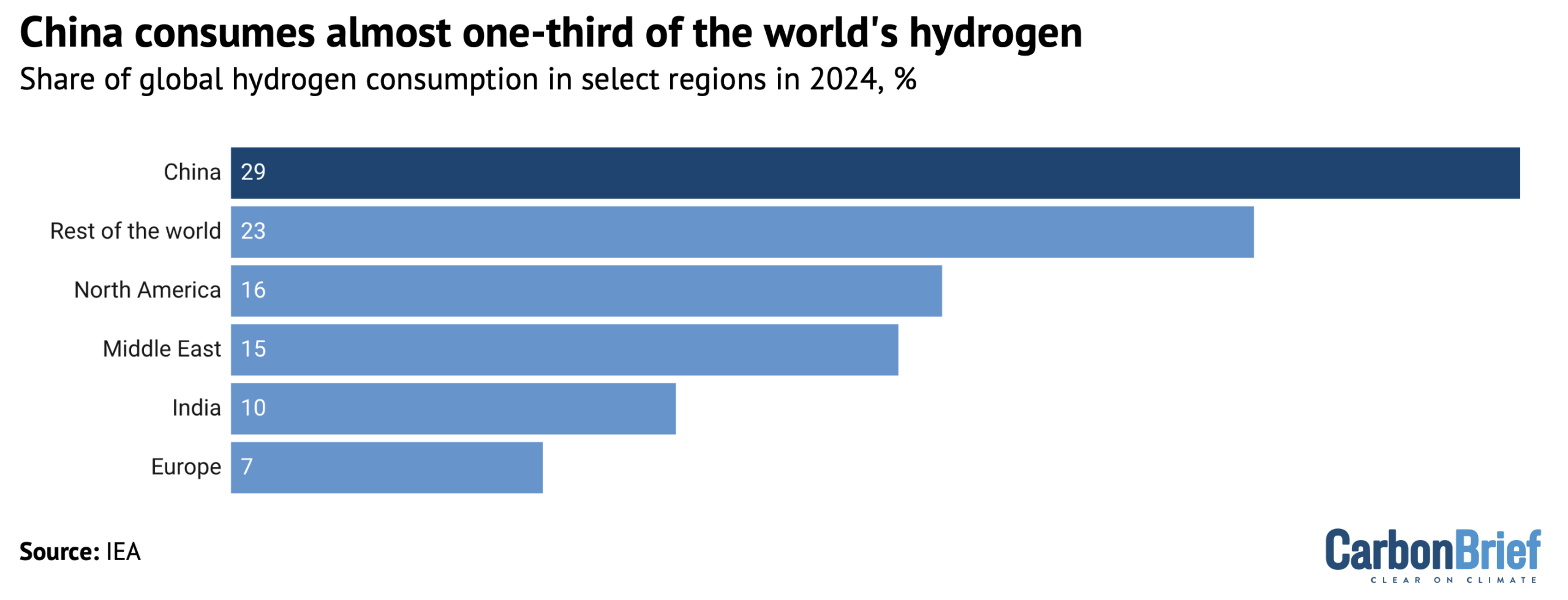
China has said that hydrogen is a key “future industry”, important to both its energy transition and its industrial policy. Hydrogen frequently goes through hype cycles, most...
Carbon Brief, with topic tags around China Policy, China, Electric vehicles.
A market opening or business pressure is becoming visible in the green economy.
Published May 27, 2026. GCE classifies it as structural shift in MARKET & BUSINESS EXPANSION.
Chip reads this as a green-transition signal, not just a headline: China has said that hydrogen is a key “future industry”, important to both its energy transition and its industrial policy. Hydrogen frequently goes through hype cycles, most recently...
In MARKET & BUSINESS EXPANSION, market signals matter when they change access, buyer demand, supplier position, or regional competitiveness.
The decision test is practical: does this change evidence, cost, delivery, risk, buyer access, or the next operating step?
The consequence is more important than the headline.
Market expansion changes which companies, suppliers, and buyers can compete in the transition.
Project Impact
Projects should ask whether this changes buyers, suppliers, routes to market, or local value capture.
Business Impact
Market expansion can create new demand, but it also raises competition and evidence expectations.
Governance Impact
Regulation matters when market access depends on proof, origin, emissions, or supplier readiness.
Market System Impact
A market becomes durable when demand, standards, logistics, and finance start reinforcing each other.
Follow the incentives, not the announcement.
- Prepared suppliers: They gain market access when they can meet new buyer and evidence requirements.
- Regional operators: They can benefit when green demand creates new routes for local production.
- Slow incumbents: They lose ground when buyers shift toward cleaner or better-documented alternatives.
- Unverified suppliers: They face exclusion when market access depends on evidence.
Trust improves when the angles are visible.
The signal matters if it changes customers, procurement, cost, or competitive advantage.
The risk is being asked for proof before systems are ready.
The opportunity is to align market growth with standards and local value.
Primary action: Opportunity
- Identify who gains market access if the signal repeats.
- Check what proof buyers will require before procurement shifts.
- Look for partnerships that connect demand, evidence, and delivery.
This signal belongs to a wider GCE category pattern.
 Green Queen · Jun 3
Nestlé Partners with Helaina to Develop Baby Formula with Recombinant Breast Milk Protein
 Green Queen · Jun 3
Allplants Owner Buys Factory Out of Administration to Shore Up Plant-Based Manufacturing
 Canary Media · Jun 2
7 states sue to stop Trump’s offshore wind deal with TotalEnergies
Source and evidence still matter.
This page is a Chip interpretation of the original article. It is not the original article. Please read the original source for the full report.
Source: Carbon Brief · Published May 27, 2026.
What readers are saying.
No comments yet
Q&A: Can China turn hydrogen into its next clean-energy industry?
This brief does not have any reader comments yet.