
BoE Integrates Net Zero Transition Risk into Collateral Framework
RATING & SUSTAINABLE FINANCE: BoE Integrates Net Zero Transition Risk into Collateral Framework. Read it as a finance-readiness signal where evidence changes cost of capital.
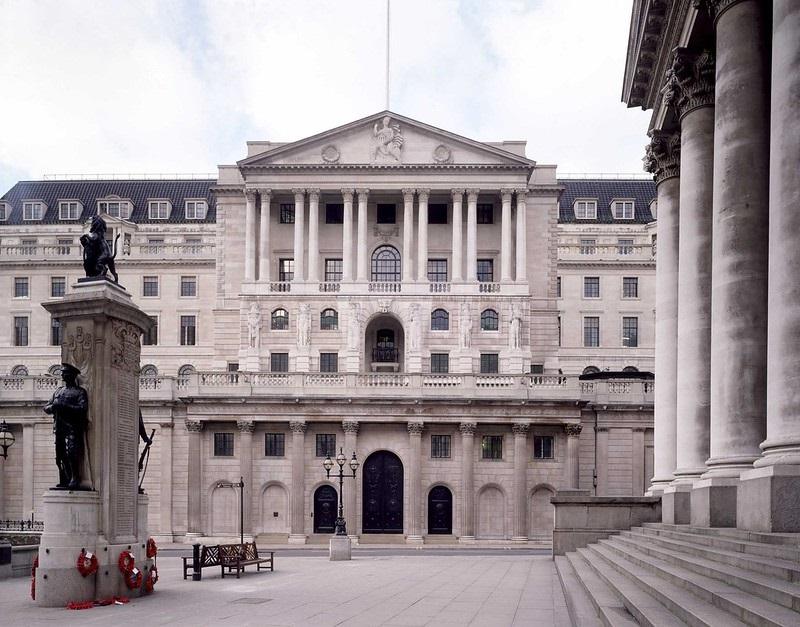
RATING & SUSTAINABLE FINANCE: BoE Integrates Net Zero Transition Risk into Collateral Framework. Read it as a finance-readiness signal where evidence changes cost of capital.
Still developing
The source reports a concrete green-economy development. Keep distance between the fact reported and the wider consequences inferred from it.
Scan the signal before reading the analysis.
- Signal level
- Structural Shift
- Signal strength
- High
- Time horizon
- 0-24 months
- Human impact
- Medium
- Economic impact
- High
- Governance impact
- High
- Confidence
- Medium
What the source is actually reporting.
The Bank of England (BoE) issued a new Market Notice outlining changes to its collateral eligibility framework, including, for the first time, the integration of climate...
ESG Today, with topic tags around Regulators, Sustainable Finance.
Finance is reacting to green transition risk, disclosure quality, or investable opportunity.
Published Jun 18, 2026. GCE classifies it as structural shift in RATING & SUSTAINABLE FINANCE.
The article, rewritten as a brief.
GCE rewrites the reported signal in its own words from the crawled source excerpt, title, source, date, and operating lane. It is a reader-friendly digest, not a copy of the publisher article, and it is not permission to repost the publisher's full text, image, or reporting elsewhere.
ESG Today is reporting a structural shift connected to rating & sustainable finance. The core reported point is this: The Bank of England (BoE) issued a new Market Notice outlining changes to its collateral eligibility framework, including, for the first time, the integration of climate transition-related...
For a green-transition reader, the important detail is not only the headline. The story sits inside rating & sustainable finance, where capital moves when evidence, risk, ratings, and transition logic become clear enough for diligence. This means the reported move should be read through market access, evidence, delivery capacity, buyer behavior, and the operating boundary it may change.
The timing also matters. The item was published on June 18, 2026, and GCE classifies it as structural shift with medium confidence. That means the direction is visible enough to watch, but the practical outcome still depends on follow-through, implementation details, and whether other sources confirm the same movement.
The useful takeaway is practical: keep the source fact separate from the interpretation, then ask what must be checked next. For this brief, the next checks are who gains access, who faces pressure, what proof is required, which suppliers or buyers are affected, and whether the reported change becomes a repeatable pattern rather than a single news item.
Chip reads this as a green-transition signal, not just a headline: The Bank of England (BoE) issued a new Market Notice outlining changes to its collateral eligibility framework, including, for the first time, the integration of climate...
In RATING & SUSTAINABLE FINANCE, capital moves when evidence, risk, ratings, and transition logic become clear enough for diligence.
The decision test is practical: does this change evidence, cost, delivery, risk, buyer access, or the next operating step?
The consequence is more important than the headline.
Sustainable finance moves when risk, rating, evidence, and transition logic fit together.
Project Impact
Projects need finance logic that connects cost, revenue, risk, and measurable transition value.
Business Impact
Funding terms can shift quickly when investors reinterpret climate risk or evidence quality.
Governance Impact
Sustainable finance relies on disclosure and rating systems that can separate transition substance from green labeling.
Market System Impact
When capital standards move, they reshape which projects can scale and which claims become too expensive to defend.
Follow the incentives, not the announcement.
- Finance-ready projects: They can attract capital when evidence and economics are already structured.
- Investors with strong diligence: They gain advantage by separating real transition value from weak narratives.
- Projects without bankable proof: They struggle when capital asks for clearer risk and impact evidence.
- Companies with vague transition claims: They face higher scrutiny from ratings, lenders, and investors.
Trust improves when the angles are visible.
The issue is whether evidence changes risk, return, or credibility.
The pressure is to convert sustainability work into finance-grade disclosure.
The next step is making impact legible to capital without overstating certainty.
Primary action: Prepare
- Map the finance or rating standard touched by the story.
- Check whether your project data would survive diligence.
- Translate the signal into one financing or disclosure readiness step.
This signal belongs to a wider GCE category pattern.
 Smart Cities Dive · Jul 24
$530M from state millionaire tax will go to Boston-area transit agency
 Responsible Investor · Jul 24
US announces tariffs in bid to push other countries to bolster forced labour rules
 Responsible Investor · Jul 24
In the Loop: Climate consultations, new podcast episode and say on Schroders
Source and evidence still matter.
This page is a Chip interpretation of the original article. It is not the original article. Please read the original source for the full report.
Source: ESG Today · Published Jun 18, 2026.
What readers are saying.
No comments yet
BoE Integrates Net Zero Transition Risk into Collateral Framework
This brief does not have any reader comments yet.